


At Witchford Village College, we understand our statutory responsibility to ensure that all pupils in every year group have access to high-quality Careers Education, Information, Advice and Guidance (CEIAG).
We aspire to meet the national standard set by the Gatsby Benchmarks (outlined below). Over the next year, we will be working towards achieving the Quality in Careers Standard accreditation – the nationally recognised award for CEIAG in schools, which closely aligns with these benchmarks. This ensures that all students, at every stage, receive consistent and high-quality careers advice and guidance.
The Gatsby Benchmarks
Professor Sir John Holman, Education Advisor at the Gatsby Foundation, identified eight benchmarks that form the core dimensions of effective careers and enterprise provision in schools. These benchmarks help raise young people’s aspirations, promote access to all career pathways, and enable them to develop the skills and outlook needed for career wellbeing, adaptability, and resilience:
- A stable careers programme
- Learning from career and labour market information
- Addressing the needs of each pupil
- Linking curriculum learning to careers
- Encounters with employers and employees
- Experiences of workplaces
- Encounters with further and higher education
- Personal guidance
The implementation of these benchmarks was tested in a two-year pilot with 16 schools and colleges in the North East of England, producing highly successful results. Every school and college in the pilot now fully achieves at least four benchmarks, compared to 50% previously achieving none. All schools and colleges now partially achieve every benchmark, and 75% fully achieve six to eight benchmarks – a significant improvement compared to the original Gatsby report, where no school fully achieved more than five benchmarks.
 What We Offer
Effective careers education and guidance makes a positive contribution to the wellbeing of individuals, their families, and their communities, supporting social and economic growth. By engaging students, teachers, parents, and the local community, we aim to enable our students to fulfil their potential and achieve a successful future.
For more information, please contact Head of Careers, Juliet Martin.
- Phone Number: 01353 662053 Ext 7116
- Email:
How you can support us Ex-student of WVC?
Then join our growing alumni community!
We are building a network of former students that can be called upon to engage our current students and help them think about their future. Whether you left last year or twenty years ago, we want to hear from you!
We want to show current students at WVC the variety of pathways available to them after leaving school. We will also keep you informed of school news and any social events. Once on the network, there is no obligation to volunteer and you can get involved around your availability.
Join today through Future First, the charity we are working with to grow our alumni community – futurefirsthub.org.uk
An apprenticeship is a viable alternative pathway for students who wish to enter the world of work rather than continue in full time education. It is the responsibility of the student to find employment and the working week would generally be 80% on the job working/training and 20% at college or being assessed.
Apprenticeships can be accessed at any age and they come in a range of different levels across many different sectors.
Useful Links
- National apprenticeships website
This website has details of all apprenticeships nationwide. - Find Apprenticeships
If you are looking for an apprenticeship this is a national site which is a really good starting point. - The College of West Anglia
Apprenticeship Vacancy Site - Cambridge Regional College
Apprenticeship Vacancy Site
How School Subjects Shape Your Future Success
What you learn in school isn’t just about passing exams – it’s the foundation for the skills and knowledge you’ll use throughout your life. Every subject, from maths and science to art and languages, builds abilities that employers value, such as problem-solving, creativity, communication, and critical thinking.
By understanding how your subjects link to real-world careers, you can make informed choices, discover new opportunities, and start shaping a future that excites you.
In this section, you’ll find links to helpful leaflets packed with information about how each subject connects to different career paths, giving you practical ideas and inspiration for your next steps.
Downloads
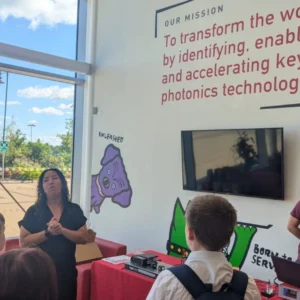
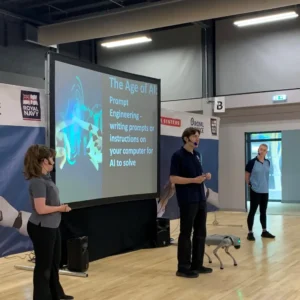
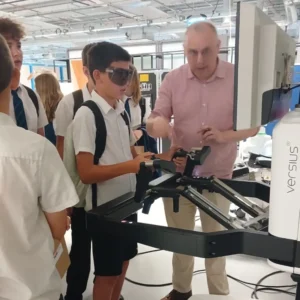
We are proud to work with a diverse range of local and national employers who support our students in gaining valuable work experience and insights into the world of work.
These partnerships provide opportunities across multiple industries – from engineering and property to healthcare, recruitment, and professional services. By connecting with these employers, students can learn about different career paths, develop essential skills, and build networks that will help shape their future.


Further Information
All students and parents at Witchford Village College have access to Labour Market Information that is reliable, user friendly and relevant. This includes information on Apprenticeships, T-Levels, Job Opportunities, Employment and career paths.
What is LMI?
Labour Market Information and/or Intelligence helps provide data, statistics and predictions about present and future trends in the workplace. It is a vehicle by which students and parents can understand where gaps may be in the labour market so considering prospective careers.
This page will be updated regularly with both national and local LMI.
This includes information on:
- skills, career pathways and progression routes in the local labour market
- job applications and interviews
- educational institutions, courses, qualifications, entry requirements and costs
- professional bodies
- employment sectors, employers, jobs, salaries and employment trends
- jobs, training and apprenticeships
- job demands and working life
- financial planning
What we do:
- teach students how to find and process information
- give students access to up-to-date information in a range of different formats, ie posters, websites, assemblies, year group sessions
- offer the students first-hand information through encounters with employers and experiences of the workplace
Careerometer
Careerometer can be used to explore and compare key information about occupations, help you learn about different occupations and identify potential careers.
It provides access to a selection of UK headline data relating to pay, weekly hours of work and future employment prospects for different occupations, as well as description of the occupation.
Simply type in the title of the job you are interested in and the widget provides a series of options from which you can select the most relevant to you. You can then look up another two occupations and compare. You can also select ‘display the UK average’ and compare the information with the occupation you have selected.
Further Information
Locally the ‘Cambridge Area 14-19 Partnership’ runs an application system for people who live in this area.
There is one application system for all of the following Sixth Forms and Colleges:
- Bishop Laney Sixth Form
- Cambourne Sixth Form
- Cambridge Academy for Science and Technology
- Cambridge Maths School
- Cambridge Regional College
- Chesterton Sixth Form
- College of West Anglia
- Comberton Sixth Form
- Hills Road Sixth Form
- Impington International College
- Long Road Sixth Form
- Northstowe Sixth Form
- The Oakes Sixth Form (formerly Netherhall)
The application process is on line using Mychoice@16. Your son/daughter has been given a log in and we have started in school to complete their profile.
Post-16 Applications – Key Information
- Applying: Students can apply to multiple providers for the same or different courses (e.g., A Levels, IB, BTEC, T Levels). Applications are sent to all chosen providers, and students must indicate their order of preference.
- Entry Requirements: Check each provider’s criteria in prospectuses or online. Most Level 3 courses (A Levels, IB, Vocational A Levels) require at least 5 GCSEs at grade 4/5 (some require 7), including English and Maths. Some subjects need grades 6 or 7. Requirements vary – research carefully.
- Course Details: Confirm course titles and outlines on MyChoices@16 and provider websites to ensure they match your intentions.
- Personal Statement: Students must write one; guidance is on Teams and via email. Parents should review it.
- Predicted Grades: Added after mock exams before Christmas; these determine offers.
- Application Process: No parent signature needed, but check accuracy. Final checks are done by the College.
- Deadlines: Witchford Village College – 5 Dec 2025; Cambridge Area Partnership – 13 Jan 2026. Late applications are at providers’ discretion.
- Guidance Meetings: Providers decide who to invite; meetings usually Feb–Mar. Ensure correct contact details to avoid missed appointments.
- Offers: Providers may make conditional offers after meetings, usually by Spring Term. Hold multiple offers until GCSE results in August.
- Results Day: Be available on 20 Aug 2026 to confirm or decline offers.
- Further Guidance: Visit the Careers section on the school website and Year 11 Careers Teams for routes and opportunities.
Up and Coming Events
Further Information
You can find all our statutory careers policies and documents linked below:
T Levels are two-year technical qualifications in England, introduced in 2020 as a high-quality alternative to A Levels and apprenticeships for students aged 16–19. They are designed to prepare young people for skilled employment, higher apprenticeships, or further study.
Key Features
- Equivalent to 3 A Levels in size and academic level.
- Developed with input from employers to meet industry needs.
- Combine classroom learning (around 80%) with a substantial industry placement (around 20%), lasting at least 315 hours (approximately 45 days).
Structure and Assessment
Each T Level includes:
- A core component (graded A*–E) covering broad industry knowledge.
- An occupational specialism (graded Pass/Merit/Distinction) for specific job roles.
- A mandatory industry placement.
- Students receive an overall grade: Pass, Merit, Distinction, or Distinction*.
Subjects Offered
There are now over 20 T Level subjects, including:
- Digital (e.g., Software Development, Data Analytics)
- Construction (e.g., Design, Surveying and Planning)
- Health and Science
- Education and Early Years
- Business and Administration
- Engineering and Manufacturing
Progression Opportunities
T Levels carry UCAS tariff points, so they can lead to university degrees. They also prepare students for skilled employment or higher apprenticeships.
Further Information
We’re excited to offer Unifrog, an all-in-one careers and destinations platform designed to help you plan your next steps after school. Whether you’re thinking about university, apprenticeships, college courses, or even work experience, Unifrog brings everything together in one easy-to-use place.
What can you do on Unifrog?
- Discover Pathways: Explore thousands of university courses, apprenticeships, and international opportunities.
- Build Your Profile: Record your skills, achievements, and experiences to create strong applications.
- Get Application Support: Access tools for writing personal statements, CVs, and managing applications like UCAS.
- Find Careers You’ll Love: Take quizzes and use resources to match your interests with future careers.
Why use Unifrog?
Unifrog makes planning your future simple and stress-free by giving you all the information and guidance you need in one platform.
How to get started:
Log in using the details provided by the school and start exploring your options today!
Further Information
What is work experience?
Work experience is when students spend time in an adult working environment carrying out tasks and duties more or less as an employee. The placement will not necessarily reflect the eventual career choice of the student but should allow a broad experience of the workplace and an opportunity to develop skills for the future.
The benefits of work experience
Work experience helps students to:
- Understand the world of work
- Improve and appreciate their skills and talents
- Gain confidence
- Accept the importance of schoolwork and achieving good qualifications
- Gain knowledge of jobs or careers.
Finding Work experience
Students are encouraged to organise their own placements. A Work experience form will need to be completed on Unifrog via the ‘placements’ tile and returned by January to ensure sufficient time is allowed to carry out essential health and safety checks.
Work experience is a fantastic opportunity to learn about a job or an area of work. You will use skills that you might not even know you have and develop new skills that will help your work better with other people now and in the future.
Finding your own work experience placement can be a good learning experience. It means you have more choice and control over where you go, and it is a chance to show of your organisational skills! Its ok if you don’t have any ideas about what you want to do yet – we can help you get started.
How to decide on a work experience placement?
If you already know what kind of job you want to in the future that’s great. The best thing to do is look for work experience that is related to the job you want to do, or in the same sector or industry as your chosen career.
For example
- You want to be a Chef – find a placement in a restaurant or canteen
- You want to work in medicine – find a placement in a hospital or GP surgery
- If you like to travel – you could look for a placement in a travel agent or tour company
- For careers in finance – why not consider a placement in an accounts office or bank?
Have a look at Unifrog on the resources section, there is lots of ideas on here and you can take a personality test to give you some ideas of careers that might match your personality.
A good place to start is to think about what subjects you are good at and how these can relate to different jobs
- English – Newspapers, magazines, publishing, writing. Libraries, teaching
- Maths – Accountancy, banking, engineering, computer programming, finance
- Geography – green charities, local borough town planning, environmental science
- Science – vets, pharmacies, zoos, laboratory work, hospitals, teaching
If you are really stuck for ideas
If you really can’t think of an area of work you want to find a placement in, or decide which subject you like best, try asking yourself these questions:
- What am I good at?
- What are my interests and hobbies?
- What jobs have I seen other people do that I think look interesting?
Or you could just go for something completely different, or for a job you know little about. Work Experience is all about gaining an insight into the world of work.
It doesn’t have to be a career that you would choose in the future. Talk to you friends, family, teachers and careers advisor for some ideas.
When you have some ideas jot down your thoughts:
- Top 10 placements you would like
- Imagine what you might be doing in your placement
- Try to be realistic – remember you are only there for one week and will be doing junior level work.
How to Start the search
Now you have got a list of the type of placement you want – it is time to find one. Remember you won’t be the only student looking for a work placement as all schools undertake work experience so be organised and start your search early.
Step by Step Guide
- If someone in your family works somewhere interesting, you can ask them if
they’ll contact the Human Resource department for you. - Ask family, friends, neighbours if they might consider you for a work experience placement
- If you already know of a company that interests you do an internet search for their contact details
- Find employers in your local area by doing internet searches
- Look at job boards to find employers in your local area (www.indeed.com & www.reed.co.uk)
- Think of companies you know in your local area, perhaps you passed them by on the way to school or out shopping. Many students think of shops for good work experience so try to think of other types of opportunities as well.
- Think about how you are going to get to a placement – is there a bus you can get, could a relative drop you off?
- Get in touch with the business.
How to get in touch with a business
Once you have a list of companies the next step can be to get in touch. Don’t worry this isn’t as scary as it sounds.
First step is to identify the person you need to speak to. For smaller companies you may need to ring them up to find out who this is, for larger companies they may have this information on their website.
If you can’t find a name of someone then a good place to start is address your enquiry to Human Resources Department.
Once you have identified who you need to speak to you will need to make contact via email.
What to write in an email?
- Use a professional sounding email address. Why not use your school email?
- Start by introducing yourself and that you are looking for work experience,
mention the department you would like to work in if it’s a larger business. Don’t forget to give the dates you are looking for. - Mention the school you go to, any subjects you are studying and anything you do in your spare time that might be relevant to the company (e.g., play computer games for a gaming company)
- Say why you are interested in a placement with that company
- Say what interests you about their products or services. Always be polite, check spelling and grammar and give a professional image.
If they ask you to send a CV.
If an employer asks you to send in a letter and CV always say yes and then find someone to help you do this. Mrs Martin – Head of careers can help you with a template.
There is also lots of help and advice about writing a CV on Unifrog. (www.unifrog.com)